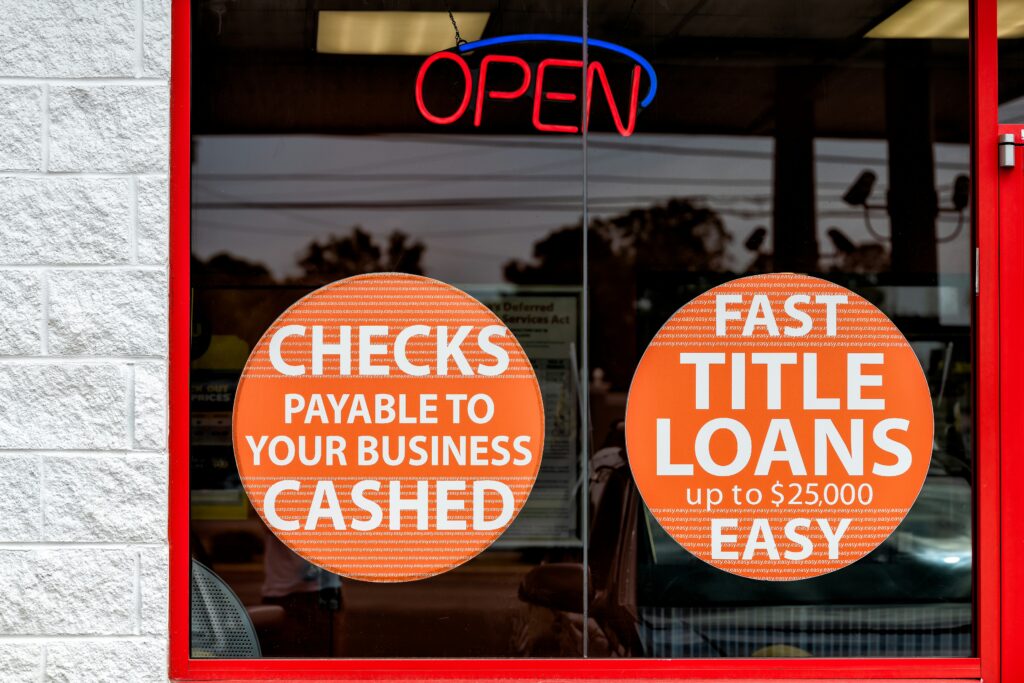
Installment lenders, title lenders and rent-to-own companies – also known as predatory institutions – maintain a strong grasp on Atlanta’s predominantly-Black neighborhoods. These businesses trap residents in cycles of debt by offering financial products and services that are difficult to escape. By targeting Black residents with high-interest loans and substandard products, these institutions extract wealth from communities already facing systemic injustice.
Kindred Future’s detailed analysis of Neighborhood Planning Units (NPUs) in the City of Atlanta shows a clear pattern:
67% of predatory institutions are concentrated in neighborhoods with the highest Black populations, while only 33% are in wealthier, non-majority Black neighborhoods where residents have better access to traditional financial services such as banks.
This geographic division in financial services makes it harder for Black communities to build wealth and break free from financial hardship, reinforcing Atlanta’s vast racial wealth divide, where the net worth of white households ($238,355) is 46x more than the net worth of Black households ($5,180)².
This policy brief explores the effects of predatory institutions on Atlanta’s Black neighborhoods and offers specific policy recommendations. By capping interest rates, addressing the concentration of predatory businesses and supporting access to affordable credit, local and state decisionmakers can begin to dismantle these harmful practices. Atlanta can implement smart policy solutions that create pathways to financial stability for communities confronting economic exploitation.
Defining predatory institutions:
Kindred Futures defines predatory institutions as businesses or financial entities that exploit communities affected by structural racism by offering goods, services or financial products under terms that disproportionately harm consumers. These institutions thrive by targeting individuals or businesses with limited access to mainstream financial services or competitive markets, often imposing excessive costs, fees or interest rates. The result is a cycle of debt and financial insecurity that deepens inequality, strips wealth and undermines the well-being of communities.