Current Wealth-Building Realities for Georgia's Youth and Young Adults
Upward Mobility for Children Born in the Bottom of the Income Ladder in Georgia
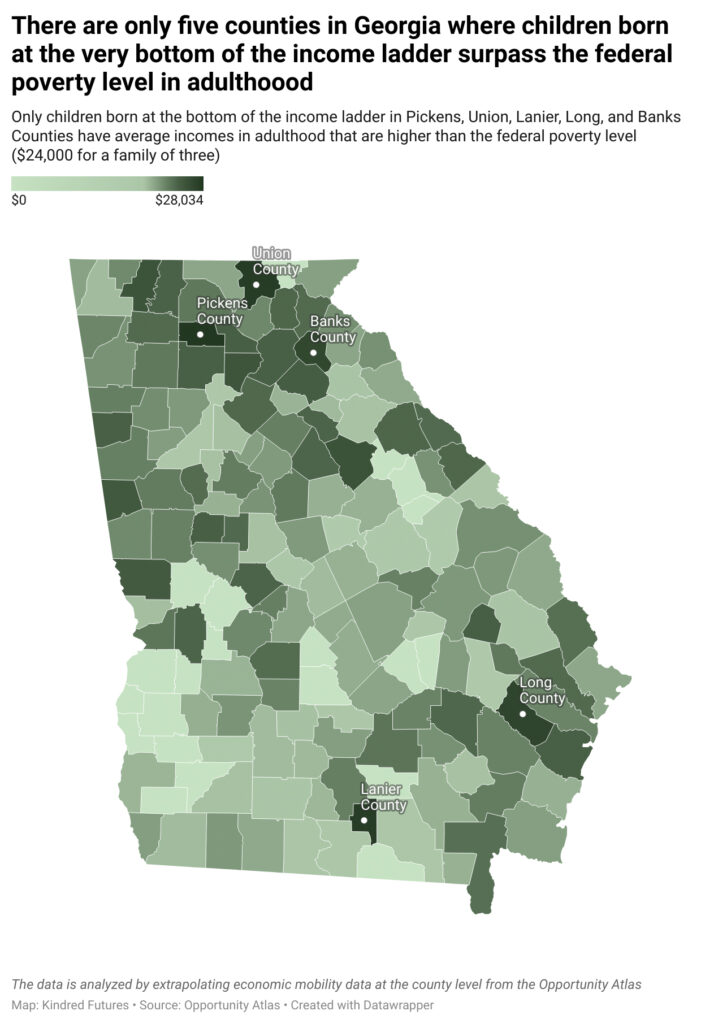
Economic mobility in Georgia remains significantly limited, particularly for children born into low-income households. A child born in Georgia to parents in the bottom 20 percent of the income ladder has less than a 5 percent chance of reaching the top 20 percent as an adult.32 To make matters worse, very few will surpass the poverty line later in life. Only children born in five counties will rise above the poverty line, and just barely. Structural barriers including disparities in wealth inheritance and economic investment, create significant challenges for children in Georgia to move up the economic ladder. Without intervention, these trends contribute to persistent wealth divides and hinder long-term economic growth across the state.
Geographically, mobility outcomes are particularly poor for children raised in certain regions of Georgia, including rural communities and historically disinvested neighborhoods across the state. Low-mobility zones tend to have higher poverty rates, lower-performing schools, and fewer job opportunities—factors that limit wealth accumulation as children transition into adulthood. The fact that economic mobility is so constrained in Georgia underscores the importance of policies that provide financial resources to children from an early age.33
Median Net Worth of Young Adults
For young adults in Georgia, the ability to build wealth early in life is crucial for long-term economic stability. However, median net worth data show that many young adults—especially those from low-wealth, rural and Black or Latinx families—enter adulthood with little to no financial assets. Nationally, young adults start out with a median net worth that often falls below $10,000. In Georgia, disparities in early-life financial resources mean that many young adults start their careers with zero or even negative net worth, particularly if they have accumulated student loan debt or face difficulties securing stable, well-paying jobs.34
The lack of early wealth presents a major hurdle to economic mobility, as young adults with few financial assets struggle to afford higher education, buy a home, or start a business—three of the most common pathways to long-term wealth accumulation. By providing a capital endowment at birth, baby bonds would ensure that every young adult in Georgia has a financial resource to help them transition successfully into independent adulthood.
Percentage of Babies Born to low-wealth households
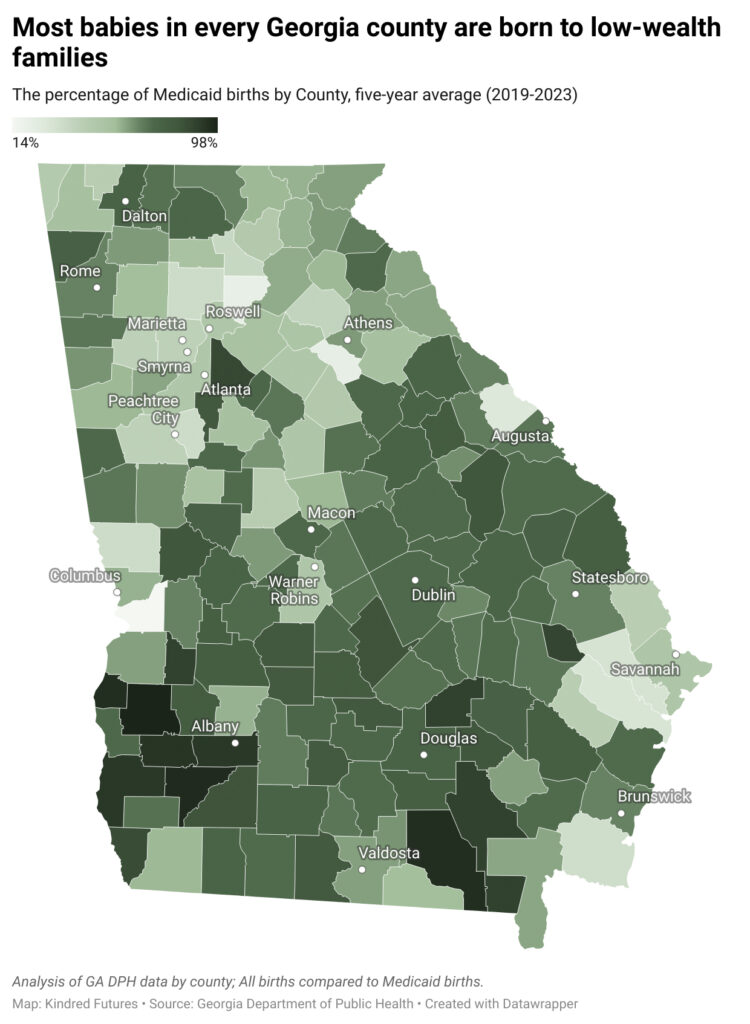
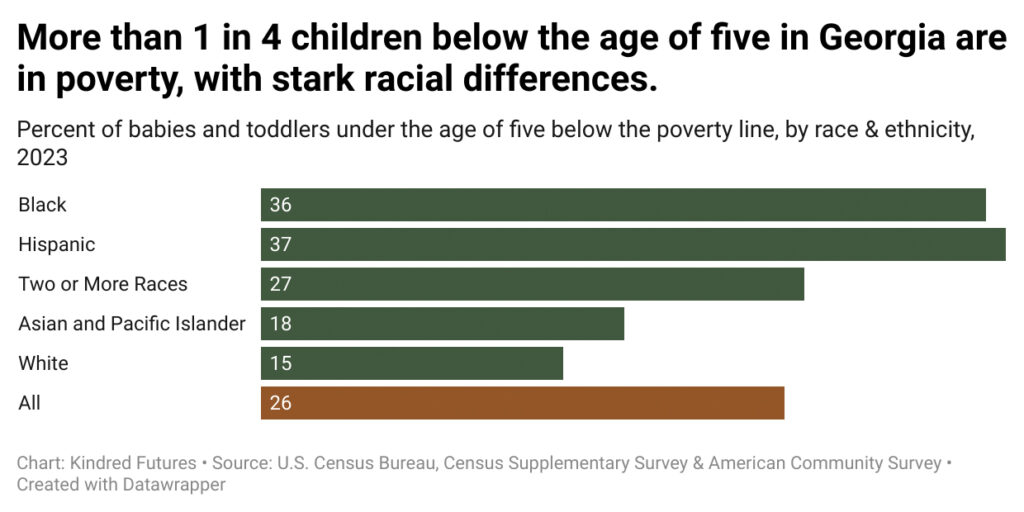
A significant portion of Georgia’s newborns enter a landscape shaped by structural economic inequality.35 Nearly half of all births in the state are covered by Medicaid, reflecting broader patterns of limited access to generational wealth, quality employment, and affordable healthcare. These inequities are not evenly distributed: Black and Latino infants are far more likely to be born into households classified as low-wealth due to historic and ongoing exclusion from economic opportunity. According to the Georgia Department of Public Health, nearly 65 percent of Black babies are born into Medicaid-eligible families, compared to about 35 percent of white newborns—underscoring how racial disparities in wealth and public health are present from birth.36
These disparities in birth conditions set the stage for long-term economic inequalities. Babies born into poverty often experience financial instability in their households, which can impact early childhood development, educational attainment, and future wealth-building opportunities.
Without targeted interventions, children born into lower-wealth families are more likely to remain economically disadvantaged as adults, reinforcing generational cycles of wealth inequality. Strong policies are needed to offset the financial disadvantages present from birth, ensuring that all children—regardless of the household they are born into—have a fair opportunity to build wealth and achieve long-term economic security.