Policy Recommendations and Conclusions A Beloved Community, A Brighter Tomorrow

An effective climate resilience strategy requires interventions at all levels of society (e.g., household, neighborhood, local, state, federal); needs to be inclusive of residents who are renters; and requires decision-makers to acknowledge and address both historical systems and current public policies to create affordable, reliable, and climate-resilient energy solutions for Black, low-wealth, and frontline communities most at risk.

Data from City of Atlanta resident interviews and survey responses call for actions that: 

  1. Provide property owners with the resources and tools to weatherize and maintain their homes through continued support of home weatherization programs. 
  2. Strengthen supports to mitigate high utility costs for Atlanta residents with low wealth by expanding the Low Income Home Energy Assistance Program. 
  3. Ensure regulations are in place to mitigate environmental harms, especially for residents living near industrial sites. 
  4. Advance public and community-controlled utility models for energy equity that collectively center and reinvest back in communities. 
  5. Reinforce renter protections and options for safe and affordable housing by enforcing tenant protections ratified under Georgia HB 404 and HB 346.   

Even still, residents remain resilient and find new ways to care for themselves, their families, and each other. Although generational shifts have left some residents feeling more isolated, Southwest Atlanta communities find ways to engage with and invest in their neighborhoods and other residents by providing tangible and intangible support, maintaining a sense of resourcefulness by adapting, and seeking new information. 

While cost is the largest barrier (56%) to participating in a weatherization program (Figure 12), Atlanta residents frequently cite a lack of information about aid programs, suggesting a need for better and more coordinated marketing of existing programs towards populations who can benefit the most. This may be especially true for senior residents who are wary of strangers because of increased solicitation by fraudulent actors. Even residents who participate in weatherization programs say that it is difficult to understand what is available to them and to differentiate between the types of services they need most as they manage living costs for their households. 

Recommendation 1: 

Continue investing in home weatherization programs 

Since 1976, the United States’ Department of Energy has appropriated funds to assist low-income families in increasing the energy efficiency of their homes. These funds, allocated to states based on the following criteria, have helped eligible families save nearly $372 on average each year.25 

Allocation criteria: 

  1. Low-Income Population Factor. The population factor is the share of the nation’s low-income households in each Grantee expressed as a percentage of all U.S. low-income households. 
  1. Climate Factor. The climate factor is obtained from the heating and cooling degrees for each Grantee, treating the energy needed for heating and cooling proportionately. 
  1. Residential Energy Expenditures Factor. The residential energy expenditure factor is an approximation of the financial burden that energy use places on low-income households. The approximation is necessary because of the lack of state-specific data on residential energy expenditures by low-income households.26 

Georgia last received $84 million to support eligible citizens whose “household income [does not] exceed 200% of the federal poverty level.” Through the Weatherized Assistance Program (WAP), eligible households can receive assistance with the following energy-saving home installations: 

  • Air and duct sealing, 
  • Wall, floor, and attic insulation 
  • Heating, ventilation and air conditioning system improvements 
  • Energy efficiency improvements in lighting 
  • Hot water tank and pipe insulation 
  • Water conversation devices. 

Recent federal financial decommitments27 from the WAP and Low Income Home Energy Assistance Program (LIHEAP)28 will require states to find alternative solutions to bridge the funding gap. One potential opportunity for increased impact could be to explore pathways that would expand the income eligibility requirements to include households whose incomes exceed 200% of the federal poverty line. While state and local officials work to secure additional funding streams, the following measures could be considered: 

  1. State and local entities could consider providing corporate incentives to climate-oriented businesses that also commit to utilizing additional profits to invest in a state-financed weatherization program. 
  2. State and local entities could levy additional regulations on corporations that disproportionately add waste to the environment. The increased revenue from these profits could be earmarked to provide assistance to residents. 
  3. State and local entities could allow additional tax incentives to contractors and small businesses that commit to providing weatherization services to families in households with low incomes.

These considerations, in addition to other existing measures, could help decision-makers fill future gaps and weather a potential decrease in federal financial support. 

Recommendation 2: Expand provisions under the Low Income Home Energy Assistance Program


While residents differed in their relative utility cost burdens, all highlighted making choices to limit their energy use to avoid spending more money on utilities. One of the renters noted that they rarely utilized the air conditioner in their unit, 

“I seldom run my air conditioner because, like I said, it’s a lot of trees around. And where I’m at, it seems like it’s always…. cooler there. When my niece, my grandson came home, they’ll say, ‘Grandmama, don’t you want the air on?’ And I tell them, I said, ‘If it’s too hot in here for you, you can turn the air on.’  

Although the increased temperature in her unit did not bother the renter in this discussion, other family members were impacted. They note later in the conversation that they were spending approximately nearly 30% of their monthly income on utilities, which presents difficulties for them as a senior citizen with a fixed and limited Social Security allotment. Other renters and homeowners opted for a fixed energy usage plan to manage energy costs. Currently, there are several federal and public sector initiatives available to individuals and families to alleviate the financial burden of rising energy costs related to climate change. Federally, LIHEAP,29 in place since 1981, “[…] provides federally-funded assistance to reduce the costs associated with home energy bills, energy crises, weatherization, and minor energyrelated home repairs.” Through LIHEAP, the federal government appropriated upwards of $3 billion to all states and territories to provide energy-related assistance to eligible households. Each state then determines the eligibility criteria and application guidelines. Georgia’s eligibility criteria30 are as follows: 

  • Applicants must be U.S. citizens or legally admitted immigrants. 
  • Applicants’ total gross annual household income needs to be at or below 60% of the state’s median income. 
  • The primary applicant must have full responsibility for paying the cost of energy bills for the primary home heating source. 

Georgia provides these funds on a first-come basis, and citizens over the age of 65 who meet the eligibility criteria, are eligible to apply for assistance 30 days before eligible residents below the age of 65 can apply. 

LIHEAP’s future remains in flux as recent federal cuts to the program31 have significantly reduced the staff responsible for administering the program and shifted the financial commitments to the states. While recent Congressional budget reconciliation proposals32 have appropriated more funds to safeguard the programs, following extensive advocacy efforts. LIHEAP advocates should work diligently to ensure that Georgia policymakers continue to support the program and expand the eligibility criteria to be more inclusive of households whose median incomes fall above the eligibility requirements, as they could still be burdened by the costs of home weatherization. 

Recommendation 3: Increase regulations to mitigate environmental harms

Residents raised concerns about their proximity to environmentally hazardous industrial sites in interviews. At present, tenants and homeowners in Georgia who live in or near areas that are environmentally compromised by manufacturing plants, data centers, superfund sites often do not have access to readily available financial and legal resources. This gap leaves them unable to physically ensure that their dwellings are equipped to withstand environmental hazards and unable to require property owners (in the case of renters) and businesses and corporations (in the case of property owners) to make environmentally conscious decisions to mitigate harms. Nationally, environmental protection measures have been scaled back significantly in response to the current administration’s efforts to deregulate federal oversight over industry. Thus, the decision to enact climate-conscious policies is left to state and local policymakers. 

During the 2023-2024 legislative session, Georgia lawmakers introduced HB 1263, or the Georgia Environmental Justice Act, aimed at mitigating environmental and climate impacts while also establishing regulations.

The most pertinent portion of the proposed legislation would: 

  • Require all state entities to consider and report on environmental justice concerns prior to taking certain state actions. 
  • Create the Environmental Justice Commission. 
  • Mandate that governmental agencies [consider] the disproportionate effect of environmental hazards on people of color or people from low-income families in implementing certain environmental policies.
  • Prohibit an individual’s exclusion from “any state-funded program or activity because of race, color, or national origin.”33 

While this bill has yet to receive full support from the general assembly, some of the provisions outlined could help relieve the environmental concerns outlined by city residents in our discussions.

Recommendation 4: Advance public and community-controlled utility models for energy equity

Building climate resilience in Atlanta requires not only weatherization and affordability programs but also systemic reforms to how utilities are owned, operated, and regulated. Investor-owned utilities (IOUs) often prioritize shareholder profit, resulting in higher costs and underinvestment in low-wealth and historically-disinvested Black communities. Increasing regulation for IOUs would help mitigate these negative externalities. Additionlly,  public and cooperative ownership models are better positioned to reinvest revenue into community needs, expand renewable generation, and center residents’ lived experiences in decision-making.

We recommend that Atlanta and Georgia policymakers pursue a twopronged strategy: 

  1. Pilot community energy democracy projects. Establish funding streams and regulatory support for community solar, microgrids, and cooperatively owned utilities in Southwest Atlanta and other climateburdened neighborhoods. These pilots should require meaningful resident participation in governance, with protections to ensure lowincome renters and homeowners share in the cost savings.
  2. Advance public utility reforms. Georgia should create pathways for municipal or state-owned utilities to directly build and manage renewable energy projects, reinvest surplus revenues into weatherization and affordability programs, and eliminate the structural conflict between profit and public good.

Together, these strategies would complement existing weatherization and energy assistance efforts in Atlanta, and address the systemic inequities that precipitate energy insecurity. Public and community-controlled models can transform electricity from a commodity into a public good, ensuring affordable, reliable, and climate-resilient energy for Black, lowwealth, and frontline communities most at risk.

Recommendation 5: Enforce tenant protections ratified under Georgia HB 404, and HB 346:’

Mandates aimed at expanding tenants’ rights in Georgia have been ratified by the General Assembly. Indeed, House Bill 346,34 ratified during the 2019 legislative session: 

  • Makes it unlawful for a landlord to discriminatorily increase a tenant’s rent, decrease a tenant’s services, or to threaten to bring an action against a tenant because the landlord is retaliating against the tenant (National Low-Income Housing Coalition). 

And House Bill 40435, ratified with bipartisan support during the 2024 legislative session, established the following: 

  • Landlord’s duties to uphold a habitable residence, as well as their duties to make necessary repairs and improvements. 
  • Caps on security deposit fees at two-months’ rent. 
  • A mandate that landlords or property owners provide a tenant, in writing, of intent to file an eviction and three business days to cure infractions levied against a tenant for nonrepayment of rent. 

The City of Mableton provides one example of how they have worked to expand tenant protections: 

On Sept. 11, 2025, following long-standing complaints from tenants36 regarding substandard housing conditions related to mold and substandard living conditions related to rat and roach infestations in their homes, the Mableton City Council passed their own ordinance to bolster tenant protections beyond those outlined in HB 404. According to the City of Mableton, the Safe and Healthy Housing Ordinance37 establishes the following: 

  • Legally enforceable housing standards requiring all rental units to be free from mold, infestation, structural hazards, and unsafe utilities. 
  • Clear definitions of visible mold and mandated remediation based on Environmental Protection Agency and Housing and Urban Development guidelines. 
  • An implied legal standard of habitability, ensuring all rental units meet minimum safety, health, and sanitation standards. 
  • Expanded enforcement authority allowing the City of Mableton to cite violations, order corrective action, and, if necessary, conduct emergency remediation and place liens on noncompliant properties. 

Mableton Mayor Michael Owens highlighted the heightened sense of urgency that necessitated this ordinance citing that HB 404, while well-intentioned, leaves some gaps. He notes, We know that it [HB 404] fell short. It did not define what habitable meant. [This] is filling that gap.”38 

Owens’ action to address HB 404’s gaps is consistent with our recommendation. The expanded tenant protections ratified under House Bills 346 and 404, respectively, which grant tenants increased power in negotiations with property owners are commendable. However, reflections from tenants in our interviews suggest that these laws may need increased enforcement.  Currently, state preemption  prevents local governments from instituting tenant protection rights. Relinquishing that right and allowing tenant protections at the local or neighborhood level could help mitigate some of the implementation gaps.

Conclusion

A community-driven and evidence-based policy approach is needed to address the climate crisis and provide equitable climate resilience solutions, with a special focus on historically disinvested neighborhoods that are shouldering the largest climate burdens. Our Beloved Community, Brighter Tomorrow initiative is a call to action for the City of Atlanta and cities across the U.S., particularly in the South, where there are communities and populations threatened by the effects of climate change. Communities that have been shouldering the brunt of climate and environmental impacts for decades are often the same ones most impacted by historical and structural systems that set and maintain a status quo of economic disadvantage. Kindred Futures believes in the resilience of the families in these communities and knows that a brighter future is possible. We also believe in helping the nearly two million Black households in the Deep South with zero or negative net worth on a path to build collective wealth. To foster resilient and thriving communities, it is critical to  invest in the city’s residents and local businesses in the most climate-burdened and economically distressed areas of the city. We support the expansion and strengthening of existing programs to help residents maintain, repair, and weatherize their homes; to make efforts to fix the rising housing and utility costs that extract wealth from families; and to implement environmental protections to help keep families and their investments safe. And finally, we must step forward and explore innovative and bold ways to reinvest in neighborhoods and advance energy equity through community-centered and cooperative models. A brighter tomorrow awaits us.

Renters and low-income residents rely on federal programs like Social Security or SNAP to supplement resources. However, this kind of aid can be limited or fails to meet renters’ needs because of conservative and dated threshold barriers in income. To address this, renters and low-income residents report getting help from loved ones or family members to cover living expenses or reaching out to churches to obtain food. Additional municipal or local support might help provide a much-needed stopgap for residents in need.  Even still, property owners, homeowners, and renters face a cost of living crisis that puts displacement at the forefront of their worries. 

Atlanta residents responded that they are in favor of guaranteed monthly savings on energy bills (62%) and upfront cash rebates (43%) to alleviate the financial burden of weatherization. (Figures 13 and 14). Such support would enable property owners to invest more in weatherization despite limitations caused by competing expenses. For instance, while city-funded grants offer reprieve, owners still must take on major upfront costs, be they loans or out of pocket payments. Procedural issues can prevent property owners from getting the full benefit of aid. For example, rebates can become inaccessible when requirements are unclear, such as what kinds of information should be submitted and who needs to submit it.

View All References

Read More Of The Report

Barriers To Completing Weatherization in Atlanta Homes: Cost And Control

Although grants from privately or locally funded organizations provide property owners some support to make changes protecting them from climate and environmental burdens, top barriers preventing them from investing in weatherization include cost, inability to make repairs themselves, lack of information, ineligibility for programs, and uncertainty about benefits.

While cost is the largest barrier (56%) to participating in a weatherization program (Figure 12), Atlanta residents frequently cite a lack of information about aid programs, suggesting a need for better and more coordinated marketing of existing programs towards populations who can benefit the most. This may be especially true for senior residents who are wary of strangers because of increased solicitation by fraudulent actors. Even residents who participate in weatherization programs say that it is difficult to understand what is available to them and to differentiate between the types of services they need most as they manage living costs for their households. 

“I think there may be more conversations to kind of make people understand exactly what it is. Because I know initially, like maybe two, three years ago, I’m like, ‘Climate control? That’s not me [...].’ So I think that there’s a level of awareness. And I consider myself to be like, ‘Okay, I have a college degree, I read, I understand things.’ But right now it’s like, I had to make sure people in my house are fed. I had to make sure.” – Homeowner
“Yeah, it’s trust. You got, you guys… say your mom or your grandma, 100 something, 60-70 years old, and you’re talking to them about home improvement, and you say, ‘You got a checking account?’ And they go, ‘Yeah.’ ‘What’s your account number?’ You caught, you caught. Grandma all her life saving, gone. Her check for next month gone, you know? But that’s how we… that’s how things happen. Or they come and they sit there and they got a whole bunch of brochures, and they talking real fast and they got her mind all wandering. And she don’t have anybody there to help her find the right plan that she need, even though, even you can be [a] legit place. You come in now, you got five or six brochures… Even for me to be in a good state of mind, I would get confused. I don’t know. I don’t know A from B, you know? Especially if you coming at me with a whole bunch of papers, you get confused. So we need to find, we need to have more senior centers that will bring in the resources that our seniors need. We need more senior activities for them to do so that they can be still active, even in their golden years. That’s just, that’s what I think should happen.” – Renter

Gatekeeping can lead to residents in predominantly Black communities having limited knowledge about climate and environmental burdens, as well as weatherization as a tool to curb utility costs and protect homes from weather-related damage. The need for more information is colored by a history of distrust within these communities. Continuous failures to repair systemic harm often leave residents unwilling to engage with support services, even when those services are accessible for fear that their homes may be taken away. Attention is needed to reimagine the relationship between Southwest Atlanta residents, private companies, and public institutions, so residents can benefit from locally- or corporate-sponsored initiatives. Community resilience centers, which could be integrated in community centers or public libraries, may be a solution for this by providing neighborhood members with a safe environment to gather and interact with one another, and to share important information to reduce fears and build trust with each other and public institutions.24 

“There’s a whole level of trauma and stuff that our people and some of my neighbors have about just going through these processes. Like redlining. Like, ‘I don’t know if I trust you to put a lien on nothing because you might take my house. All for me to get a lower...get some solar panels on my roof.’ What? I think it’s, it’s education, but it’s also like, ‘Well, I don’t trust these people out here.’ I don’t. I still don’t.” - Homeowner
“Because if you brought me the [energy-efficient] light bulbs, I should see a difference. [Laughing] Why isn’t it changed? And let them handle it. Because as a layperson, they’re just like, ‘Oh, we had a price hike. We’re building a new fan.’ Or whatever, they talkin’ about. It’s always something they building. Then they have an influx. But they don’t give it back to [the customer]… They give it to their top head…to do something else.” - Property owner and business owner

For renters, not owning property can mean limited or unenforced tenant protections, leaving them vulnerable. Renters experience a more limited ability to address housing concerns without the approval and willingness of property owners who pay for upgrades. Frequently, these upgrades require changes to the physical structure of homes, like insulating walls or upgrading doors and windows. Although some property owners are willing to weatherize homes when shown proof of cost-effectiveness, others are less amenable, deferring costs for upgrades to renters and even showcasing a willingness to displace tenants to increase profit.

“He’s a businessman, so you will have to come at him in a business format. With the pros and your cons. And how this would, you know, the big over picture, the whole picture. And I’m quite sure you can pitch up to him. Anybody will pitch us up to him. It’s that you got to make sure you have all your information. [Your] pros and cons and how it would look like, what it would look like… Even in the future. ‘Okay, so we’re talking about what happened today, but look down the road, five years, you won’t have to do this anymore? That won’t have to be done.’ …Make sure you got your pros and cons. Make sure you got a foolproof plan, you know, and have some examples. Be able to show some examples. ‘Okay, we did this to this house five years ago, but this is what it looked like. Then this is what it would look like now.’ So that stuff… And/or that it won’t disturb [their] renters. Say, if I’m doing a change on the house. ‘Okay, we don’t have to relocate your renters. They can still stay there.’” - Renter
“And they haven’t did any updates or upgrades on you know, the apartments [since 1974], you know, inside… As far as my heating bill in the wintertime, it still doesn’t get high. It stays there. And when I say insulation, is because I’ve sent several emails and talked with the management about… I think those apartments needs to be upgraded where we get the storm windows and the patio door needs to be there, because there is kind of a little gap in between the patio door where it’s open and closes. And during the wintertime, I do have to get that covered up. But other than that, it’s okay… And so far, I haven’t been able to talk them into doing that.”- Renter

The level of negligence disinvested property owners and managers show extends to general upkeep of properties and issues of affordability for renters, as housing costs rise.

​“I told him if I’m gonna keep staying in your house, I think you need to fix some of your properties. You need to fix the window, because of my own health, my safety, my mom’s safety, and my brother’s safety. So I think everything should be okay. He got angry, he was like, ‘You need to pack up if you think you can leave. If you think the window is not really good for you, it’s not okay for your family, so I think you just need to move. Maybe someone else, you can just come in, someone who loves the place. Who feel very comfortable using that particular window.’ I just felt like… ‘Okay.’ Because my mom was like, she loved this place, you know. She loved the like, the quiet environment and everything. That she’s okay with it. That we shouldn’t move.”- Renter

Despite this, residents find other ways to push back against the authority of property owners unwilling to make improvements by continually advocating for themselves, being agentic, and researching other resources. 

“When I went down there in April I asked them for… I come to sign my lease, and she said, ‘Well, you know, your rent going up to market value.’ I said, ‘Well, excuse me?’ I said, ‘No, hell it’s not! I’m not paying market value, because these are not market value apartments.’ I said, ‘If I’m gonna pay market value, then you need to come in and do everything that I need to have done to that apartment.’” - Renter

View All References

Read More Of The Report

Southwest Atlanta and the Audacity of Resilience

Southwest Atlanta residents cope with many challenges, like the increasing cost of living, added financial burden from climate change and exposure to environmental pollutants, and often, a seeming lack of prioritization by private companies and public institutions.

Even still, residents remain resilient and find new ways to care for themselves, their families, and each other. Although generational shifts have left some residents feeling more isolated, Southwest Atlanta communities find ways to engage with and invest in their neighborhoods and other residents by providing tangible and intangible support, maintaining a sense of resourcefulness by adapting, and seeking new information. 

While cost is the largest barrier (56%) to participating in a weatherization program (Figure 12), Atlanta residents frequently cite a lack of information about aid programs, suggesting a need for better and more coordinated marketing of existing programs towards populations who can benefit the most. This may be especially true for senior residents who are wary of strangers because of increased solicitation by fraudulent actors. Even residents who participate in weatherization programs say that it is difficult to understand what is available to them and to differentiate between the types of services they need most as they manage living costs for their households. 

“… So, I mean, I have talked to people, and [I] have a sign in my yard that says, “[The] Beltline is helping with my taxes.” And people have asked me about, like, a heritage, Invest Atlanta program.” – Homeowner
“…We just did outreach on Saturday. And when I say we fed a lot of people. We had people coming out the stores, coming in”– Renter

Property owners and homeowners are concerned about retaining wealth and home values through weatherization while managing their households. Renters, meanwhile, must focus on ensuring that their daily needs for food and housing security are met. 

“I think everybody over 65 [...] should be able to get at least $100 a month for food stamps. That’s just my opinion. At least $100. I agree with that. Regardless of what your income is.” - Renter
“… Anything over 10… been out there for over 10 years should already be grandfathered in. Where it wouldn’t be no rent increase.” - Renter
“I know you know it’s a lot of senior citizen out there. We’re out there, and we’re not going anywhere. And they don’t take Section 8 or no kind of subsidized. I said, ‘But you all need to realize that you got senior citizen out there. We’re willing to stay out there. We’re willing to pay the rent. But we’re not willing to pay market value rent. So you all need to come up with some kind of alternative. Give us senior citizen discount if you want us to pay market value.’ Make us… make it a senior citizen discount.” - Renter

Renters and low-income residents rely on federal programs like Social Security or SNAP to supplement resources. However, this kind of aid can be limited or fails to meet renters’ needs because of conservative and dated threshold barriers in income. To address this, renters and low-income residents report getting help from loved ones or family members to cover living expenses or reaching out to churches to obtain food. Additional municipal or local support might help provide a much-needed stopgap for residents in need.  Even still, property owners, homeowners, and renters face a cost of living crisis that puts displacement at the forefront of their worries. 

Atlanta residents responded that they are in favor of guaranteed monthly savings on energy bills (62%) and upfront cash rebates (43%) to alleviate the financial burden of weatherization. (Figures 13 and 14). Such support would enable property owners to invest more in weatherization despite limitations caused by competing expenses. For instance, while city-funded grants offer reprieve, owners still must take on major upfront costs, be they loans or out of pocket payments. Procedural issues can prevent property owners from getting the full benefit of aid. For example, rebates can become inaccessible when requirements are unclear, such as what kinds of information should be submitted and who needs to submit it.

“Okay, so we went through a contractor. They did all these upgrades. They did all this. But we didn’t buy the material. So how do we get the rebates? You get what I’m saying? The contractor, I already asked him, they didn’t apply for any rebate. They didn’t get any rebate. They can’t even get the rebates for our business, but how do we get it for our pocket if we do the work? So I’d like clarification on that, because it’s also a time frame to have to submit the stuff. Do I submit them my invoices from the contractor that gives a detailed list of what they did. But I don’t have a receipt for the lights, you know? The contractor buys the material, install it, charge us. I have to give them [a percentage]. And then, well, there’s no recourse for all this upgrade, which, we qualify for rebates, but how? What’s the course of action to get the actual rebates? If the contractor purchased it? We have the invoice. We have our everything, but I don’t have a itemized list of what these serial numbers are. How do we get our money back?” - Property owner and business owner
“...I think at the top level, though, it needs to be looking at the zip code, looking at the income earnings for that area, and there needs to be caps put on utility bills.” - Homeowner

Addressing the fundamental issues of all Atlanta residents — including renters’ social needs — is imperative, as is rectifying decades of harm committed through policies like de facto redlining. 

“But then it’s also now, I know we don’t have anywhere to have a garden… Like in our community. Like, where do we do that? That also impacts access to food. But these are brownfields, right? There are brownfields in our community. So is the ground okay to plant?”- Homeowner

Continued investment in the financial futures of Atlanta residents is paramount to ensuring protection from adverse weather conditions. By tending to the intersection of climate burden, environmental burden, financial security, and health, Southwest Atlanta residents can live safely in the city they’ve helped to shape. View our policy recommendations for doing just that and a call to action by one city resident to continue the fight ahead.

“Who is willing to do the footwork? That’s the problem with all, everything that we got going on in this world. Willing to do footwork and stay consistent. You know you can, you can do a survey and you get all the data. Then what you gonna do with the data? What’s gonna happen? Is it gonna get pushed over in the corner and collect dust? Or we gonna do something about it? Even if it takes 10 years to give one more person into it, do that. Don’t just let it die and then never pick it up again. If you draw one person out of 25 you draw a lot.” - Renter

View All References

Read More Of The Report

Factors Enabling Weatherization

Better access to intergenerational wealth, supportive funding like facade grants, health and wellness grants, and down payment assistance programs could lead to more opportunities for home ownership among Southwest Atlanta residents and allow them to weatherize their homes. While facade and health and wellness grants provide supplemental resources that enable property owners and homeowners to subsidize weatherization-related expenses, downpayment assistance makes ownership possible.


“… Inheriting [property], we also inherited a lot of the issues that come along with being a property owner and having a somewhat older building, because energy efficiency wasn’t there... Being that they blessed us with that [property], we do have below average lease amount [for tenants].” – Property owner and business owner
“I mean, just having seen my grandparents purchase a home, and then my mom purchased a home, I was just like, “Yeah, I need to do this.” But as a single person when I moved here, I wasn’t again, you know, I wasn’t making enough money… I was like, “Oh, wow! I’m a household of two, and how am I gonna afford?” I just did, like, a super, super deep dive into all community resources. Like on top of [Focused Community Strategies homebuyer programs] ... Being able to purchase from them, I went to a first-time homebuyer program at United Way. It was like an [Individual Development Account] program ... I saved [money] and they matched it 3 to 1, I think... I was able to use that for payment. In general, I feel like I have, had always tell my son... I’m like, “Everything I do now, I feel like I do it so that you will have… the next generation will have less of a climb.” ... So I don’t feel like I have as much of a, as far [...] trajectory for generational wealth as I would like to be at this stage of the game, but my son has a very broader sense of what it means to build wealth and save and invest...” – Homeowner

Financial support allows Southwest Atlanta residents to build wealth that may be transferred intergenerationally while also allowing residents the ability to save for unexpected events. Organizations like Invest Atlanta, Focused Community Strategies (FCS), and churches fill gaps left by inadequate access to capital in under-resourced neighborhoods, so that residents like those in Southwest Atlanta can become more food secure, obtain affordable housing, and become better integrated with other community members and local businesses.

“They just got some money. But it was only for seniors. But I was okay, because I got the Invest Atlanta [program]. But, yeah, they just got some money from, I think it might have been state money. I’m not sure. But they were doing some weatherization, some health and wellness repairs for seniors, for legacy residents...” – Homeowner
“We have one, two leaks. And the guy came out, and he fixed it. He patched it. I know he didn’t strip the roof, but he patched it. And we haven’t had any problems with that. As far as the windows, they can be updated. They need to be updated. But they’re fine. I don’t bother the windows, the windows don’t bother me.” – Renter
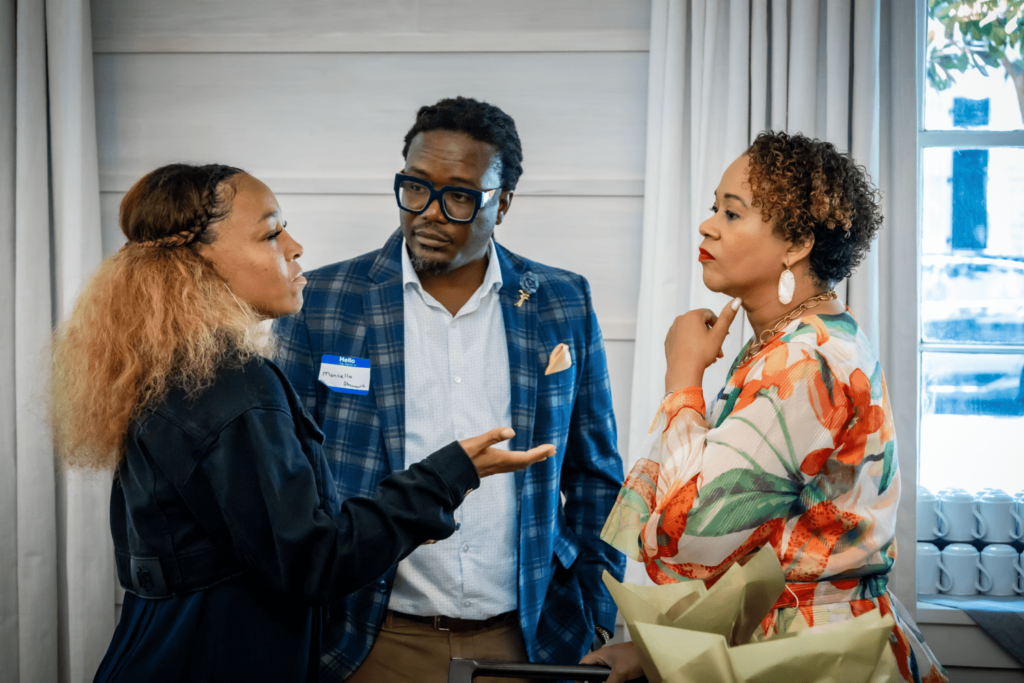
However, support from privately or locally funded organizations and intergenerational transmission of wealth is not the only way Southwest Atlanta residents can weatherize homes. Residents (including renters) find tangible support from one another by helping to make repairs, sharing resources (including information), and advocating for change and attention from civic leaders and property owners. More individualized approaches shared by residents included following energy efficiency guidelines recommended by utility providers and showcasing flexibility when assessing the financial feasibility and necessity of specific weatherization techniques to remain within budgets. This meant choosing between insulation upgrades, window and door replacement, or fixing roofs.

Although decisions to weatherize can create positive outcomes like higher property values, property owners must contend with the implications of property tax increases, including concerns of displacement if residents are priced out of their own neighborhoods.

“He also was like, “That’s gonna bring your property value up. You know, fix your windows.” And that’s just a weird thing for me, because I’m like, I’m like viewing my property value every chance I get because I don’t want the county to get my money, because that’s what, that’s what they trying to do. They trying to put me out there. You lose my house and then when you don’t have a house because they just raised it up 5% over there. But it’s a gift and a curse, right? Because you do want your property value up. I know adding a roof to my house kind of helps, and making those type of repairs helps. But then, I’m back here on [day] to meet with [Atlanta Volunteer Lawyers Foundation] to appeal my property tax.” – Homeowner

View All References

Read More Of The Report

Implementing Weatherization in Atlanta Homes: Managing Cost And Control

The most common weatherization actions taken by Atlanta residents or their landlords include installing energy-efficient lighting or energy-efficient appliances (52%), upgrading or maintaining roofing and gutters (43%), and installing “smart” programmable thermostats (42%). Installing solar panels (6%) was the least common action residents and their landlords took (Figure 10). Southwest Atlanta residents also noted that window and door upgrades (63%), heating and air systems improvements (60%), and insulation upgrades (56%), may be the most effective in protecting their homes (Figure 11). 

Factors Enabling Weatherization

Better access to intergenerational wealth, supportive funding like facade grants, health and wellness grants, and down payment assistance programs could lead to more opportunities for home ownership among Southwest Atlanta residents and allow them to weatherize their homes. While facade and health and wellness grants provide supplemental resources that enable property owners and homeowners to subsidize weatherization-related expenses, downpayment assistance makes ownership possible.

“… Inheriting [property], we also inherited a lot of the issues that come along with being a property owner and having a somewhat older building, because energy efficiency wasn’t there... Being that they blessed us with that [property], we do have below average lease amount [for tenants].” – Property owner and business owner
“I mean, just having seen my grandparents purchase a home, and then my mom purchased a home, I was just like, “Yeah, I need to do this.” But as a single person when I moved here, I wasn’t again, you know, I wasn’t making enough money… I was like, “Oh, wow! I’m a household of two, and how am I gonna afford?” I just did, like, a super, super deep dive into all community resources. Like on top of [Focused Community Strategies homebuyer programs] ... Being able to purchase from them, I went to a f irst-time homebuyer program at United Way. It was like an [Individual Development Account] program ... I saved [money] and they matched it 3 to 1, I think... I was able to use that for payment. In general, I feel like I have, had always tell my son... I’m like, “Everything I do now, I feel like I do it so that you will have… the next generation will have less of a climb.” ... So I don’t feel like I have as much of a, as far [...] trajectory for generational wealth as I would like to be at this stage of the game, but my son has a very broader sense of what it means to build wealth and save and invest...” – Homeowner

Financial support allows Southwest Atlanta residents to build wealth that may be transferred intergenerationally while also allowing residents the ability to save for unexpected events. Organizations like Invest Atlanta, Focused Community Strategies (FCS), and churches fill gaps left by inadequate access to capital in underresourced neighborhoods, so that residents like those in Southwest Atlanta can become more food secure, obtain affordable housing, and become better integrated with other community members and local businesses.

“They just got some money. But it was only for seniors. But I was okay, because I got the Invest Atlanta [program]. But, yeah, they just got some money from, I think it might have been state money. I’m not sure. But they were doing some weatherization, some health and wellness repairs for seniors, for legacy residents...” – Homeowner

However, support from privately or locally funded organizations and intergenerational transmission of wealth is not the only way Southwest Atlanta residents can weatherize homes. Residents (including renters) find tangible support from one another by helping to make repairs, sharing resources (including information), and advocating for change and attention from civic leaders and property owners. More individualized approaches shared by residents included following energy efficiency guidelines recommended by utility providers and showcasing f lexibility when assessing the financial feasibility and necessity of specific weatherization techniques to remain within budgets. This meant choosing between insulation upgrades, window and door replacement, or fixing roofs.

“We have one, two leaks. And the guy came out, and he fixed it. He patched it. I know he didn’t strip the roof, but he patched it. And we haven’t had any problems with that. As far as the windows, they can be updated. They need to be updated. But they’re fine. I don’t bother the windows, the windows don’t bother me.” – Renter

Although decisions to weatherize can create positive outcomes like higher property values, property owners must contend with the implications of property tax increases, including concerns of displacement if residents are priced out of their own neighborhoods. 

“He also was like, “That’s gonna bring your property value up. You know, fix your windows.” And that’s just a weird thing for me, because I’m like, I’m like viewing my property value every chance I get because I don’t want the county to get my money, because that’s what, that’s what they trying to do. They trying to put me out there. You lose my house and then when you don’t have a house because they just raised it up 5% over there. But it’s a gift and a curse, right? Because you do want your property value up. I know adding a roof to my house kind of helps, and making those type of repairs helps. But then, I’m back here on [day] to meet with [Atlanta Volunteer Lawyers Foundation] to appeal my property tax.” – Homeowner

View All References

Read More Of The Report

Shifts In Climate Patterns Parallel Community Realities: How Concerns About Climate Change And Weatherization Reflect Access To Wealth

Shifts In Climate Patterns Parallel Community Realities: How Concerns About Climate Change And Weatherization Reflect Access To Wealth

In Southwest Atlanta, legacy residents and younger generations are learning how to navigate climate change and environmental burdens. They are simultaneously dealing with the long-term effects institutional neglect has had on public infrastructure in the city, including high demands on energy sources and utilities in their neighborhoods.  

Approximately 69% of Atlanta survey respondents say they are somewhat or very worried about climate change’s impact on their property (Figure 6). When asked which climate-related risks they are most uneasy about, Southwest Atlanta residents listed extreme weather events (e.g., storms, hurricanes, tornadoes), extreme heat, flooding, and periods of extended droughts as their greatest concerns. One in five residents said they have already experienced f inancial loss from these kinds of events (Figure 7).

“...I reached out to [business] to see if they could weatherize my basement… It was, like, a little bit of water, because, again, my yard is low. A little bit of runoff. And I’m thinking, “Is that going to make my house crash to the ground? My infrastructure? And also, like, how will that impact my heating and cooling with, you know… I go down there and I insulate that. Honestly, they had quoted me $8,000. I was like, I don’t have that. I don’t have it. I don’t have it.
Homeowner

Two-thirds of Atlanta residents say high utility bills and the need to weatherize their homes prevent them from saving money, affecting their ability to grow assets (Figure 8). The precarious financial footing of some Atlanta residents impedes their capacity to prepare for their financial futures. Although home ownership is perceived to provide some semblance of economic stability tied to wealth, homeowners are bearing the financial burden of weatherizing their homes to protect them from extreme weather patterns and to reduce utility costs.

“One person’s [power] has been off… for like a month. They hang out on the porch [in the summer]… I know a lot of people in my neighborhood who don’t have power. And people who tell me stories of not having power for long periods of time and using power ports from neighbors... But yeah, I do have a lot of friends and neighbors who have experienced that.” – Homeowner

One method of protection property owners turn to is insurance. However, only 1 in 3 residents (31%) report having insurance coverage that protects against natural disasters (Figure 9). And among 87 residents who responded that they experienced a climate-related event, only 21% said they applied for and received government assistance through FEMA (Federal Emergency Management Agency) relief or state aid when a climate event occurred. Uncertainty of financial reimbursement after weather emergencies can be unsettling since residents may be unsure whether they will be covered or if they can afford uncovered costs.

“… I do have [insurance], so when certain things go down, like my furnace goes out, or my AC goes out, I can call them. Last time my AC went out, though... Freon was crazy expensive. [I] had to pay, like… Well, I had the service fee, was like $75. I think the freon was, like, $100. Whatever it is. So I had to pay a lot for that. But I will say that has been helpful, having the warranty program for me. Because I don’t have access to $6,000…” – Homeowner
“Okay, so we have our own insurance, and then the tenants have to have their own insurance. So the way that these companies are set up… At these insurance companies, I don’t know what’s covered. They just sent me something the other day telling me they were taking something out of my coverage. And I’m like, “What? Why?” The price didn’t go down.” – Property owner and business owner

Problems with inadequate coverage can become even more burdensome when poor city infrastructure leads to property damage, and property owners must rely on the city to fix it. Southwest Atlanta residents strongly desire more infrastructure support to keep their communities safe and clean. When external support is limited, neighborhood residents rely on one another to attend to the damage in their communities. They provide each other with support or pay out of pocket for repairs, increasing personal costs, and even potentially putting their health at risk with environmentally hazardous repairs. The emotional burden of managing these disasters when there is failure to render aid leaves Southwest Atlanta residents feeling distrustful, weighed down, and exhausted, unsure of what to do or how to bring about lasting change.

“The drain always gets clogged. I have an older lady… She comes to clean the drain all the time because she knows that that water will get there and it’ll flood, and it’ll go into our other neighbor’s house. So a lot of it has to do with the infrastructure, but also unfortunately, people that work there. Like what they prioritize and communities that are important to them. A lot of things that happen in my neighborhood don’t happen in [Buckhead], and that’s all supposed to do with Atlanta. It is, what it is!” – Homeowner

View All References

Read More Of The Report

Climate Resilience Is Essential For Community Well-Being And Prosperity In Atlanta

Climate Resilience Is Essential For Community Well-Being And Prosperity In Atlanta

The freedom to live in climate-resilient communities is essential for the economic prosperity and well-being of communities in the City of Atlanta (herein “Atlanta”). However, extreme heat waves, 1 flooding,2  prolonged periods of drought, and other environmental disasters are some of the pressing challenges Atlanta residents and business owners face, amid increases in the cost of living and the threat of displacement3

Climate change is “long-term shifts in temperatures and weather patterns”4 and can show up as extreme weather events like storms, hurricanes, extreme heat, flooding, tornadoes, and other weather events. In addition to physical damage to homes and property, extreme weather can also increase the energy required for households to maintain safe temperatures5, straining the United States’ energy infrastructure and supply.6 Yet, rising energy costs from high temperatures do not impact all communities in the same way. 

Neighborhoods with “heat islands”, or fewer trees and green spaces to absorb excess heat, are more climate burdened, especially those with older homes which tend to have less insulation and inefficient energy systems. This includes Southwest Atlanta, whose majority Black residents contend with rising temperatures and a legacy of redlining and disinvestment7 that has left southern and western Atlanta neighborhoods with  inadequate green space and tree coverage.8 Historically Black neighborhoods like English Avenue, Pittsburgh, Cascade, Vine City, Castleberry Hill, West End, and Washington Park have all been reported to be highly vulnerable to extreme heat and risk of flooding.9  

Further, data suggests Black households need to spend 43% more of their income on energy bills than White households to cool their homes.10 Black renters living in Southern states disproportionately experience energy insecurity, or the threat of utility disconnection,11 and racial inequities in homeownership mean Black households are more likely to rent12 and have limited ability to invest in energy-efficient systems. These barriers fuel continued extraction of wealth from Black families, and the ramifications include a broadening of the racial wealth divide, wherein the median wealth of Black households continues to trail all other ethnic groups.13  

The financial implications of place collide with racial inequities in economic prosperity to limit opportunites for wealth building in Black households. Data from Zillow14 suggests that Black and Hispanic or Latin homeowners face a double jeopardy when it comes to home ownership in comparison to their White peers. Not only are Black and Latin people being priced out of homeownership, when they are able to purchase homes, those homes are more likely to be in neighborhoods at high-risk of exposure to climate-related events (e.g., extreme heat, wildfire, winds). High cost of home ownership paired with exposure to weather-related disasters, hinders wealth building since excess resources will need to be used to pay for higher energy costs and repairs or upgrades to homes. Although homeowners tend to be the primary focus when discussing the implications of weather-related events, effective climate resilience strategy requires prioritizing interventions at all levels of society (e.g., household, neighborhood, local, state, and federal) that address challenges both homeowners and renters face. 

Better and more accessible weatherization tools can be a part of the solution to the climate crisis for households.15 Weatherization can protect homes and properties from climate threats while increasing energy efficiency, reducing energy costs,16  and improving health and safety.17 In Atlanta, local weatherization programs  have included those which provide energy-efficient home upgrades in high energy-burdened neighborhoods for income-eligible residents,18 and programs that assist homeowners with repairs to central systems.19 Although weatherization support programs are in the right direction, it is imperative that policy changes also acknowledge and redress how historical systems (e.g., redlining) and limited public investment have created and entrenched racial and socioeconomic wealth divides through disparities in home ownership, thereby limiting access to safe and affordable housing in areas with economic opportunity.  

In April 2025, the City of Atlanta Mayor’s Office of Sustainability and Resilience20 introduced a Climate Resilience Action Plan in an effort to achieve clean energy for all Atlantans by 2035, reach net zero emissions, reduce energy burdens, provide multimodal transportation, and improve access to fresh and affordable foods. The plan’s guiding principles — centering people and emphasis on data-driven, equitable, and just approaches — are foundational to its mission. In keeping with this, we must incorporate community-driven and evidence-based policy strategies to address the climate crisis and provide equitable climate resilience solutions, with a special focus on historically disinvested neighborhoods in Southwest Atlanta, that shoulder the largest climate burdens. 

Kindred Futures focuses on community wealth-building strategies that not only prevent the loss of wealth in historically Black neighborhoods, but also provide wealth-building opportunities for the nearly two million Black households in the American South with zero or negative net worth. We believe safeguarding assets, like homes, businesses, and community gathering spaces, and protecting access to safe and affordable places to live is essential to achieving economic prosperity and closing the wealth divide in historically disinvested communities.21 In this report, we gathered community perspectives to measure awareness and knowledge of climate impacts among City of Atlanta residents, to identify weatherization strategies and aid programs that are most helpful and accessible for residents to protect their homes and property from climate threats, and to evaluate the ability of Atlanta households to build wealth in the face of climate impacts. These insights can help other cities as they plan for climate-resilient and equitable communities.

What did we do? 

Kindred Futures used a mixed-methods approach to collect community perspectives from City of Atlanta residents during the summer of 2025. Our approach included administering a questionnaire in partnership with Atlanta POV, an initiative of Neighborhood Nexus and Atlanta Civic Circle, which was completed by 385 Atlanta residents. Residents from Southwest Atlanta were prioritized in survey recruitment because of the disproportionate climate and environmental burden they experience. In addition, interviews were conducted with community residents and business owners from Southwest Atlanta. To gain additional contextual and environmental insights, we coupled community perspectives with spatial maps of key economic and environmental data indicators. See the methodology and technical notes for more details on our methods and the demographics of residents included in the survey. 

What did we find? 

Neighborhood structures matter: When high living costs and environment collide Atlanta residents identify three primary groups as making up the social and economic structure of neighborhoods: community members, who live or work in the area; larger companies and corporations that may or may not be located within the physical boundaries of neighborhoods, but provide services to residents; and civic leaders and public institutions, who make decisions in their community’s and residents’ best interests. While the structure of groups in Atlanta neighborhoods appear relatively similar, Atlanta is financially, racially, and culturally diverse. Historically, boundaries were created and maintained, separating the life opportunities and experiences of North and Southwest Atlanta residents. This legacy persists with North Atlanta residents more likely to be homeowners than Southwest residents. This means, Southwest Atlanta’s predominantly Black communities are more likely than their North Atlanta counterparts to live in rental dwellings and to earn less than the city’s median income per household (Maps 1-4). In fact, in Atlanta, as the percent of Black residents in a census tract rises, the median income of households in a census tract decreases (Figure 1), mirroring a history of economic exclusion. Because financial stability is tied to place and ownership (Map 3-4), and financial instability can lead to challenges in withstanding the impacts of climate change or human and man-made disasters (Map 5), as climate impacts increase, we believe families in Southwest Atlanta will find it especially challenging to build generational wealth.

In addition to limited economic security because jobs often do not allow families to meet their basic needs and plan for a stable financial future, Southwest Atlanta residents shared concerns about larger companies and corporations threatening their personal and community wellbeing. While private entities like utility providers, industrial plants, real estate developers and franchises, and other external stakeholders often operate within the bounds of Southwest Atlanta neighborhoods, their presence can often come at the expense of the larger community’s wellbeing. More focus is needed on strengthening strategies that protect residents and business owners and enhance community wellbeing when private entities seek to operate within neighborhoods. One resident specifically spoke about significant concerns with environmental pollution from private companies in their neighborhood and the associated adverse health effects, like asthma. Experiencing preventable adverse health conditions can make it harder for residents and their families to lead long and thriving lives.

“There’s a paper recycling plant, which I hate. The entrance of our neighborhood... There’s a company that does metal recycling, or metal that you can turn into scrap metal. There’s one of those on the other end of the neighborhood, on the [neighborhood] side. There’s a park, which we’re working on doing beautification. So that’s on the way. [...] We also have [a towing company] in our neighborhood... And I often think about, like, with the power plant... with the paper recycling, like, our asthma... I’m like, I don’t really even walk my neighborhood, like, because of the trucks, because of the speed down the road...” - Homeowner

In southern and western areas of Atlanta, climate burden (ecological factors influenced by climate change) and environmental burden (environmental factors that either cause pollution or otherwise negatively affect human health) are relatively higher, leading to a higher combined climate and environmental burden for many Southwest Atlanta residents (Maps 6-8). According to the CDC’s Historical Heat and Health Burden module, Southwest Atlanta is also more vulnerable to heat-related illnesses than other parts of the city, making extreme heat particularly problematic for residents with pre-existing health conditions like asthma, diabetes and heart disease (Maps 9-10). 

“[…] Because I’m a social worker, and I do some health advocacy work, I know that based on our numbers in our area, that in addition to, like, nutrition insecurity and all that... asthma is one of the biggest issues of children in [zip code]... And in my mind, I’m thinking it’s because of this stuff. It’s because it’s not enough [...], because they don’t have enough trees, because it’s a whole bunch of concrete, you know?! It’s because we’ve got all this industrials, we’ve got all these trucks flying down the road with their exhaust and all the things, right?!” - Homeowner

Amid environmental and climate threats, residents are expected to ensure that payments for their mortgage, rent, utilities, and insurance remain up to date, regardless of their ability to pay. If not, they face debt or lose access to much needed services. In fact, Atlanta residents consistently indicate that the high costs of utility bills are causing them some form of financial distress, with over half of survey respondents (54%) noting they either frequently or occasionally struggled to pay utility bills in the past year (Figure 3). Respondents making under $50,000/year are more likely to report frequent or occasional difficulty paying utility bills in the past month (63%) than those earning over $50,000/ year (45%).

“[…] Because I’m a social worker, and I do some health advocacy work, I know that based on our numbers in our area, that in addition to, like, nutrition insecurity and all that... asthma is one of the biggest issues of children in [zip code]... And in my mind, I’m thinking it’s because of this stuff. It’s because it’s not enough [...], because they don’t have enough trees, because it’s a whole bunch of concrete, you know?! It’s because we’ve got all this industrials, we’ve got all these trucks flying down the road with their exhaust and all the things, right?!” - Homeowner

The reality is that residents are juggling financial obligations while managing the physical and emotional weight of economic insecurity and exposure to climate and environmental burdens. 

Over seven in 10 Atlanta residents (74%) cited the high cost of living as the most significant barrier to improving their financial situation (Figure 4). This number is high for survey respondents making under $50,000/year (72%) and those making over $50,0000/year (77%). In some instances, property owners in Atlanta with access to financial support offered through agencies like Invest Atlanta can supplement some costs associated with maintaining homes and businesses, reducing the likelihood of debt burden. Nonetheless, ownership is not wholly protective. Homeowners, business owners, and renters remain wary at best, and skeptical or distrustful at worst, that federal, state, and city resources—  including provisions through Section-8 for low-income housing sponsorships, Social Security, Medicaid/Medicare, or SNAP—  will be available to them when they need it most.

“I mean, you literally have to have no income. And, you know, I applied for food stamps after I stopped work, because, you know, they told me to apply for food stamps. ‘See if you get food stamps.’ Well, I was eligible for food stamps, and I was eligible for $3. $3 a month. And what you think $3 dollars gon’ buy?!” - Renter
“This year, I’ve really seen an increase [in utility bills], but I’ve been paying a nice amount for a long period of time ... and sometimes a paycheck is not what you think ... You can’t even pay rent... it’s impossible. You’re living to pay rent. I used to hear that when I was a kid, people living to pay rent, living to pay bills— and that’s not what life should be, you know? And it’s programs out here for that, but we have to go through so much red tape. Jump so many hurdles, and still we get a portion of it but not the full amount we should... that we’re asking for.” - Renter

Lack of perceived and tangible support from public institutions for those who need it undermines trust because housing and food security are fundamental to physical health and emotional wellbeing. Residents who struggle to pay utility bills often also face difficulties with food and housing insecurity, as well as lack of access to reliable transportation (Maps 11-14). Given these challenges, it is no surprise that 1 in 3 Atlanta residents believe they will not be able to pay the rent or mortgage in the next two months (Figure 5). Administrative changes at the federal level that reduce access to aid in the form of SNAP, Medicaid/Medicare, and weatherization and energy efficiency programs may worsen trust at local levels and heighten financial burdens if state and local public officials cannot identify ways to fill gaps and supplement resident needs.22,23

Improved access to financial security and stronger public infrastructure before people reach the point of crisis or displacement can help mitigate the legacy of disinvestment in Southwest Atlanta.

“This year, I’ve really seen an increase [in utility bills], but I’ve been paying a nice amount for a long period of time ... and sometimes a paycheck is not what you think ... You can’t even pay rent... it’s impossible. You’re living to pay rent. I used to hear that when I was a kid, people living to pay re“… Even though we have senior housing, we have low-income housing, but it’s still not meeting the people. You’re getting some people, but the ones that need it… You have people that work, that still need housing. They’re hard working people. They work every day. Don’t they deserve a piece of the pie? They deserve to stay in a nice house in a decent community. Or somebody that might have had a bad record in their 20s. They made a mistake. In their 30s or early 50s, they deserve another chance. Then you got that grandma that’s raising her grandkids. She need a place to stay, you know.” - Renter nt, living to pay bills— and that’s not what life should be, you know? And it’s programs out here for that, but we have to go through so much red tape. Jump so many hurdles, and still we get a portion of it but not the full amount we should... that we’re asking for.” - Renter

Improved access to financial security and stronger public infrastructure before people reach the point of crisis or displacement can help mitigate the legacy of disinvestment in Southwest Atlanta.

“… Even though we have senior housing, we have low-income housing, but it’s still not meeting the people. You’re getting some people, but the ones that need it… You have people that work, that still need housing. They’re hard working people. They work every day. Don’t they deserve a piece of the pie? They deserve to stay in a nice house in a decent community. Or somebody that might have had a bad record in their 20s. They made a mistake. In their 30s or early 50s, they deserve another chance. Then you got that grandma that’s raising her grandkids. She need a place to stay, you know.” - Renter nt, living to pay bills— and that’s not what life should be, you know? And it’s programs out here for that, but we have to go through so much red tape. Jump so many hurdles, and still we get a portion of it but not the full amount we should... that we’re asking for.” - Renter
Atlanta Renter

Residents know that disinvestment does not just occur on a personal level but within their neighborhoods through public and private actors. Although there is some hope that civic leadership will bring about change, shifts in the perception of community structures and relationships leave others less optimistic because of conflicts of interest between community leaders and private companies.

“If they work for [utility company] and sit on some board with one of these companies, I don’t feel like they should be able to be a public servant. You know what I’m saying? Like, that’s a conflict of interest. And of course, you gonna always ride with the money over the people. More than likely they are.” - Property owner and small business owner nt, living to pay bills— and that’s not what life should be, you know? And it’s programs out here for that, but we have to go through so much red tape. Jump so many hurdles, and still we get a portion of it but not the full amount we should... that we’re asking for.” - Renter
Atlanta Property Owner and Business Owner

Broken promises to Atlanta residents, not limited to lack of follow-through on neighborhood requests for necessary infrastructure upgrades, bureaucratic loopholes that delay processes for change, and the absence of egalitarian regulations protecting all residents, support a legacy of racism, income inequality, and redlining. They maintain the status quo that only certain zip codes matter, reinforcing the legacy of redlining along the same boundaries that were established in the mid-20th century (Map 15).

View All References

Read More Of The Report

Report Introduction: A Beloved Community, A Brighter Tomorrow

Explore how Southwest Atlanta residents remain resilient while navigating everyday life amid a climate crisis, and how “it’s so much bigger than light bulbs” as residents struggle with the rising cost of housing and utilities. Concerns over Atlanta’s extreme heat and flooding are growing, and as one resident puts it, “They say scattered showers. It was a monsoon.”

The freedom to live in climate-resilient communities is essential for the economic prosperity of residents in Atlanta. Bold and climate-resilient strategies will need to incorporate solutions addressing historical systems and current public policies that have created and entrenched racial and socioeconomic wealth divides and inhibited many from accessing safe and affordable housing. As homeowners bear the burden of weatherizing their homes to combat extreme weather, renters are struggling to find safe and affordable housing; and for both renters and homeowners alike, utility costs are a growing barrier to saving for a brighter future. 

Read on for steps stakeholders can take to help communities safeguard assets and ensure our beloved community sees a brighter tomorrow.

  • Most City of Atlanta residents surveyed (69%) shared concern over potential climate impacts to their homes and property. These concerns served as the backdrop to everyday challenges such as paying for utilities, the high cost of living, and wealth building.
  • When faced with climate, environmental, and everyday financial challenges, residents chose collective action and resilience. Aid programs, guaranteed energy bill savings, and cash rebates up front were some of the more popular ways residents said could help them protect their homes and weather the growing climate crisis.
  • Residents, community advocates, and policy and decision-makers in the City of Atlanta must call for more substantial support for affordable, safe, and sustainable housing. Actions that policy and decision-makers can take include expanding home weatherization programs, strengthening assistance for utility costs, enforcing renter protections, and mitigating harmful environmental exposures for residents who live near industrial sites. Exploration of community-centered utility models that reinvest in neighborhoods would usher in bold and timely reform in utility ownership, operation, and regulation, to advance energy equity.

View All References

Read More Of The Report

Kindred Futures, Formerly Atlanta Wealth Building Initiative’s Latest Brief Proposes that Black-owned Businesses Improve Neighborhood Well-Being

Today, Atlanta Wealth Building Initiative (AWBI) released its latest brief, “Standing on Business,” data and policy recommendations that seeks to substantiate Black businesses are neighborhood well-being assets that deserve to be shielded from displacement. The brief blends resident and business owner interviews with a rich dataset of Black-owned businesses in the City of Atlanta to examine the relationships between small Black-owned business density and neighborhood well-being.[i]

“The sustainability of Black-owned businesses in Atlanta is critical to preserving the social and economic fabric of our city’s historically Black neighborhoods,” stated Dr. Alex Camardelle, vice president of Policy and Research at AWBI. “Black-owned businesses in our neighborhoods are closing too frequently, and as market pressures intensify, we must prioritize policies that protect these businesses from displacement while fostering community wealth.”  

While a few studies have examined the impact of small businesses on neighborhood well-being, very few, if any, have examined the unique impact of Black-owned businesses. The closure of Black-owned businesses in Atlanta threatens the core identities and economic vibrancy of the city’s historically Black neighborhoods.[ii]

 The report was produced with the support of United Way of Greater Atlanta and leverages their Child Well-Being Index data to explore the relationship between small Black-owned businesses and community-wide benefits.

 “Our analysis shows that Black-owned business in Atlanta’s neighborhoods can boost child well-being, underscoring the vital role these businesses play in community prosperity,” said AWBI Senior Policy & Research Associate Jarryd Bethea, one of the brief’s co-authors. “To protect this impact, we urge policymakers to prioritize commercial affordability, launch a vacancy tax, and support the growth of legacy businesses through targeted public investments.”

“Black-owned businesses are not just economic engines; they are pillars of cultural and social strength in Atlanta’s historically Black neighborhoods,” said Alvin Glymph, vice president of Strategic Partnerships at United Way of Greater Atlanta. “The data in this report affirms what we’ve long believed: supporting these businesses is essential to enhancing community well-being and advancing equitable growth. Our commitment to protecting these assets aligns with our broader mission of fostering resilient communities where children and families can thrive.”

Key findings from the report include: 

·       Black-owned small businesses in Atlanta contribute significantly to neighborhood well-being, including a measurable increase in child well-being scores.

·       Black-owned businesses in Atlanta are disproportionately affected by rising commercial rents, making commercial affordability a significant barrier.

·       There are seven Black-owned small businesses for every 1,000 Black residents in Atlanta, but these businesses earn only $0.17 for every $1.00 earned by other small businesses.

·       The majority of Black-owned businesses in Atlanta have fewer than 20 employees and face challenges accessing capital due to systemic barriers.

·       Commercial rents in majority-Black neighborhoods have increased at a faster rate than in majority-white neighborhoods, contributing to the displacement of Black-owned businesses.

The brief also makes the following policy recommendations:

·       Implement a Vacancy Tax: Deter property owners from holding vacant commercial spaces by imposing a tax on long-term vacancies.

·       Establish Commercial Tenant Rental Assistance: Create a program to provide rental subsidies and support to Black-owned businesses struggling with rising commercial rents.

·       Partner with Mission-Driven Developers: Encourage the development of smaller, more affordable retail spaces through partnerships with local, community-focused developers.

·       Launch a Legacy Business Program: Support long-standing Black-owned businesses with subsidies, grants, and technical assistance to preserve historically significant commercial corridors.

·       Enhance Resource Navigation Networks: Strengthen technical assistance for Black-owned businesses to help them access capital and other resources more effectively.

Read the brief here.​

[i] Anchored by a deep commitment to community based participatory research, AWBI completed this brief by conducting interviews with participants who play key roles in their communities as business owners, neighborhood residents, or both in the City of Atlanta. AWBI also analyzed data provided by Dun & Bradstreet Holdings, Inc. and Data Axle, Inc. to examine Black business trends at a neighborhood level. We use this approach because the U.S. Census surveys only report business demographics at the metro level, which limits the analysis of business dynamics on neighborhood well-being.

[ii] Raymond, Elora Lee, Ben Miller, Michaela McKinney, and Jonathan Braun. “Gentrifying Atlanta: Investor purchases of rental housing, evictions, and the displacement of black residents.” Housing Policy Debate 31, no. 3-5 (2021): 818-834.

Kindred Futures, Formerly Atlanta Wealth Building Initiative Launches Partnership with Step Up Savannah to Support a Business Service Cooperative

Atlanta Wealth Building Initiative (AWBI) and Step Up Savannah have announced a partnership to support a business service cooperative which will bolster the small business ecosystem in advancing economic mobility through a shared ownership model. 

Through this groundbreaking collaboration, AWBI will provide planning resources to support Step Up Savannah’s co-design process that will engage community leaders, and mission-aligned and strategic partners over this next year. The planning process is meant to produce a shared-ownership model that will benefit a collective of local non-profits and historically disinvested businesses.  

“The most important thing we learned when we met with residents and leaders across the region and asked them what wealth meant to them was that it meant ‘freedom.’ And they don’t feel free because what freedom truly is – is the ability and the power to determine your reality,” said Dr. Janelle Williams, Co-Founder and CEO of AWBI. “The truth is too many Black households and Black businesses are locked out and, on the fringes, when it comes to determining their reality. So, we are going to take the work we have done in Atlanta and customize it based on what partners, like Step Up Savannah and others are sharing they need to contribute to an economy that works for all.” 

“Today marks a pivotal step towards economic equity and empowerment in the Southeast, particularly Savannah, ” said Dr. Alicia M. Johnson of Step Up Savannah. “Through our partnership with the AWBI, Step Up continues its commitment to fostering a robust and equitable ecosystem that embraces shared ownership—a model that not only builds businesses but transforms lives. We believe the shared ownership model can move beyond business and even into our social safety net to leverage the collective power of our community and right-size our outreach.” 

While Savannah is a city rich in human, natural, and creative resources, the income poverty rate for Black residents is 26.1% compared to their white counterparts at 7.2%. Moreover, the labor market engagement and jobs proximity index indicate that Black residents are least successful in accessing employment or owning a successful business long-term. On average, they live in neighborhoods with a 10-point gap in job proximity and a 17-point gap in labor market engagement compared to their white counterparts, according to the 2017 City of Savannah Assessment of Fair Housing report. 

The cooperative both incubates and supports local small businesses from historically Black neighborhoods, maximizes collaborative partnerships, and creates a shared service model that provides revenue, support services, and bolsters opportunities for expansion.