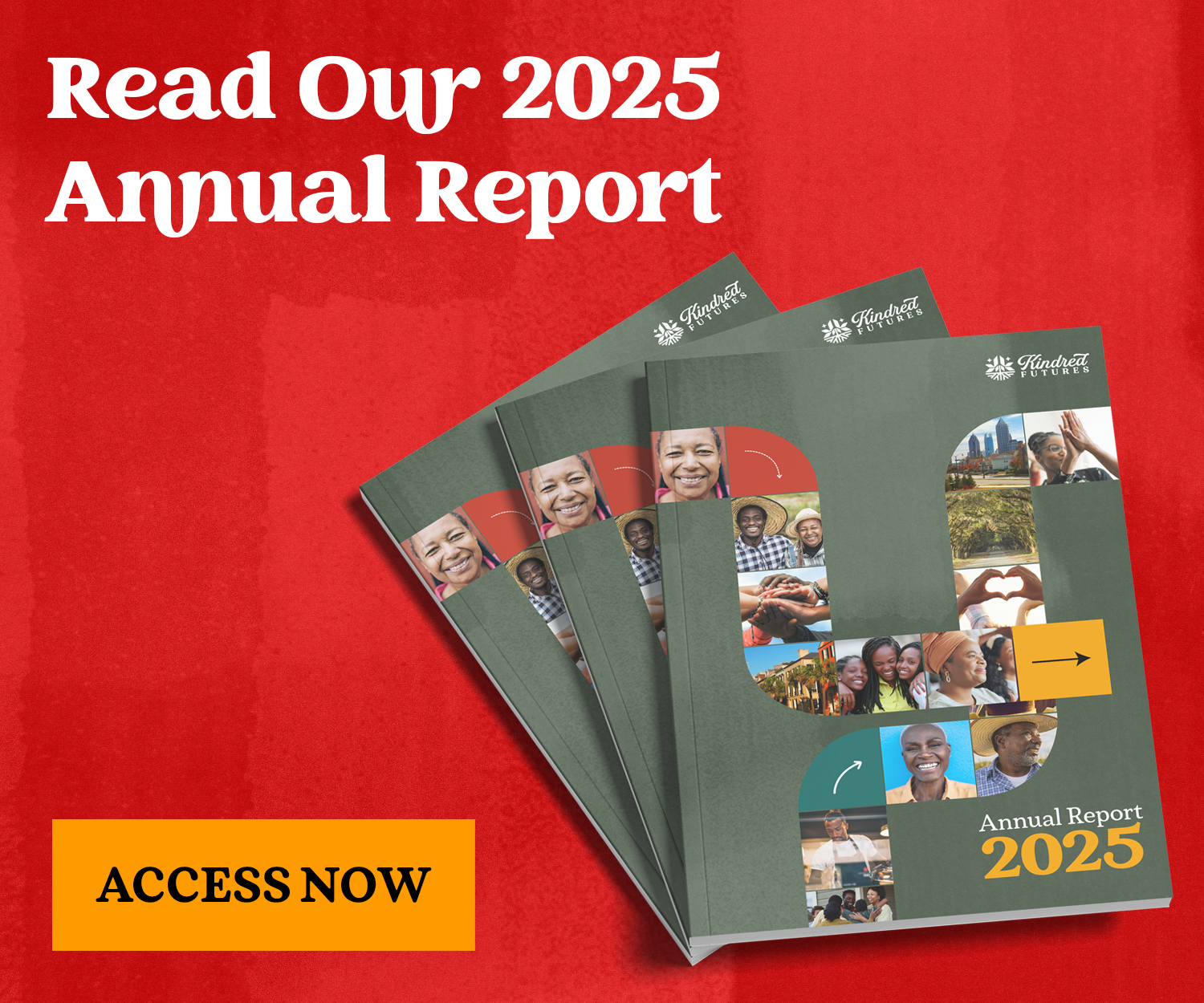
ATLANTA, GA, January 28, 2026 – Today, Kindred Futures released its new report, A Beloved Community, A Brighter Tomorrow, which addresses the intersection of climate resilience and racial wealth equity in Atlanta. The report offers steps stakeholders can take to help Black communities safeguard assets, reduce vulnerabilities, and protect lives.
The freedom to live in climate-resilient communities is essential for the economic prosperity of residents in Atlanta. Bold and climate-resilient strategies will need to incorporate solutions addressing historical systems and current public policies that have created and entrenched racial and socioeconomic wealth divides and inhibited many from accessing safe and affordable housing.
Most City of Atlanta residents surveyed (69%) shared concern over potential climate impacts to their homes and property. These concerns served as the backdrop to everyday challenges such as paying for utilities, the high cost of living, and building wealth.
“Atlanta sits at the intersection of two urgent challenges: climate risk and racial wealth inequality. As climate threats intensify and energy and mitigation costs rise, wealth extraction continues to undermine household stability,” said Dr. Alex Camardelle, vice president of Policy and Research at Kindred Futures. “While rooted in Atlanta, this report offers scalable solutions for cities across the country and makes clear that public investment must step up to meet this moment.”
An effective climate resilience strategy requires interventions at all levels of society (e.g., household, neighborhood, local, state, federal); needs to be inclusive of residents who are renters; and requires decision-makers to acknowledge and address both historical systems and current public policies to create affordable, reliable, and climate-resilient energy solutions for Black, low-wealth, and frontline communities most at risk.
“The release of Beloved Communities matters because it amplifies residents’ realities, connects climate to our collective well-being, and advances policy solutions rooted in what communities actually need,” said Janelle Williams, Ph.D., CEO of Kindred Futures.
Key findings from the report include:
- When faced with climate, environmental, and everyday financial challenges, residents chose collective action and resilience. Aid programs, guaranteed energy bill savings, and cash rebates up front were some of the more popular ways residents said could help them protect their homes and weather the growing climate crisis.
- Residents, community advocates, and policy and decision-makers in the City of Atlanta must call for more substantial support for affordable, safe, and sustainable housing. Actions that policy and decision-makers can take include expanding home weatherization programs, strengthening assistance for utility costs, enforcing renter protections, and mitigating harmful environmental exposures for residents who live near industrial sites. Exploration of community-centered utility models that reinvest in neighborhoods would usher in bold and timely reform in utility ownership, operation, and regulation, to advance energy equity.
The report also makes the following policy recommendations:
- Continue investing in home weatherization programs
- Expand provisions under the Low Income Home Energy Assistance Program
- Increase regulations to mitigate environmental harms
- Advance public and community-controlled utility models for energy equity
- Enforce tenant protections ratified under Georgia HB 404, and HB 346
Kindred Futures partners with Black Wealth Solution Providers, redefining wealth so that Black people have the opportunity to contribute to and accelerate a just and inclusive economy. We are connected and committed to new models of abundance because we know that investing in people pushed to the economic fringes, results in thriving economies and communities.
Read the report here.